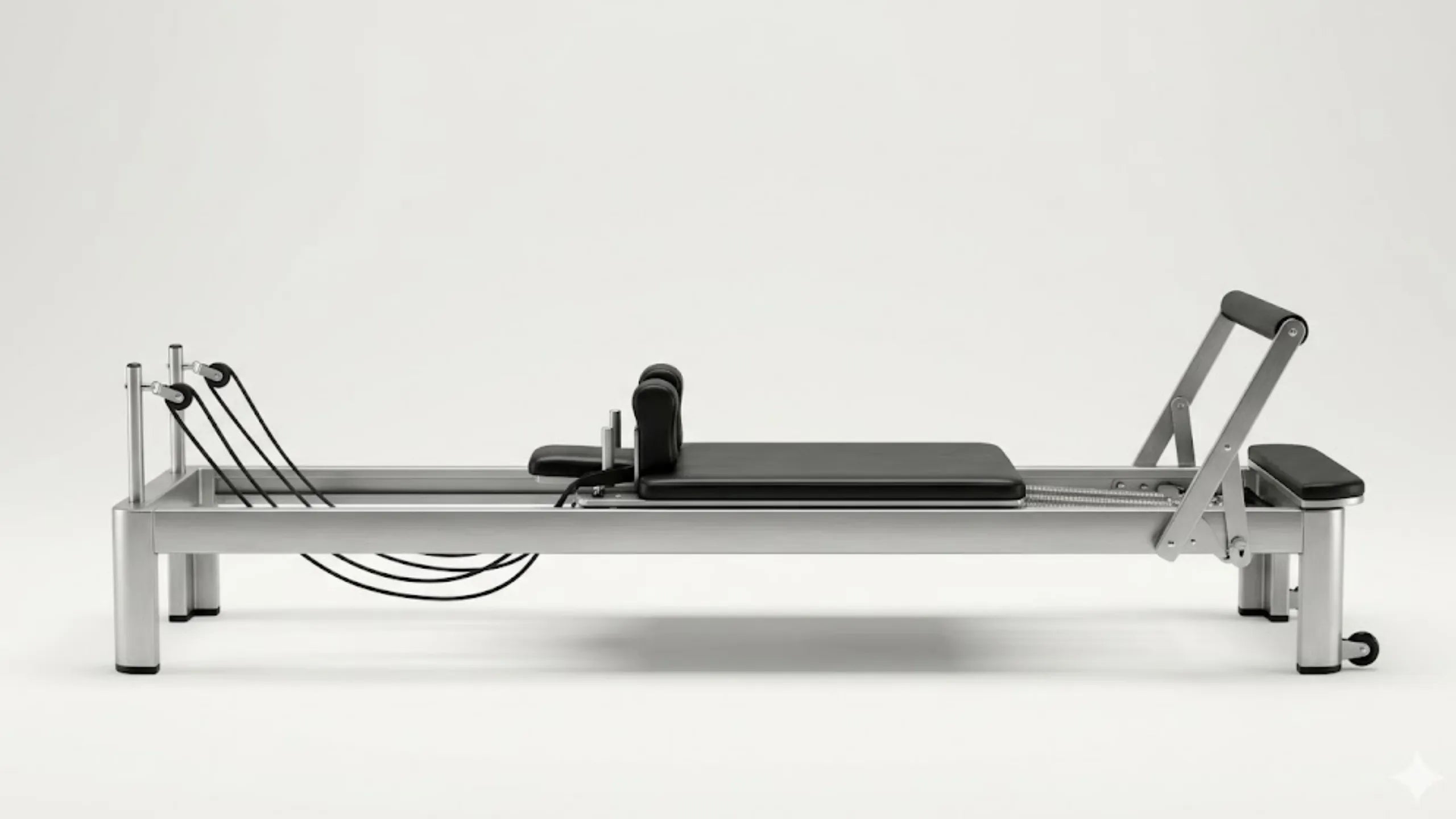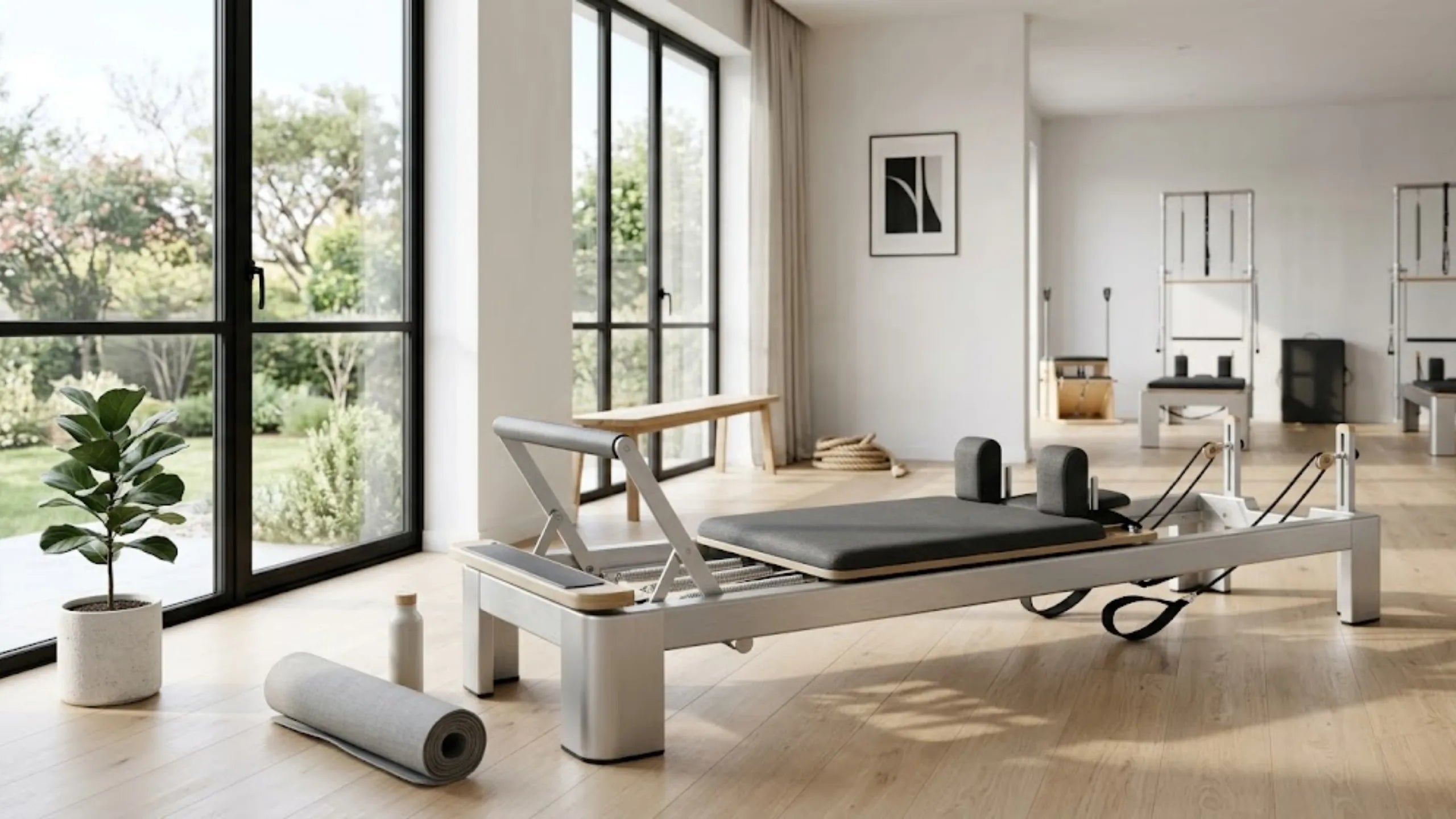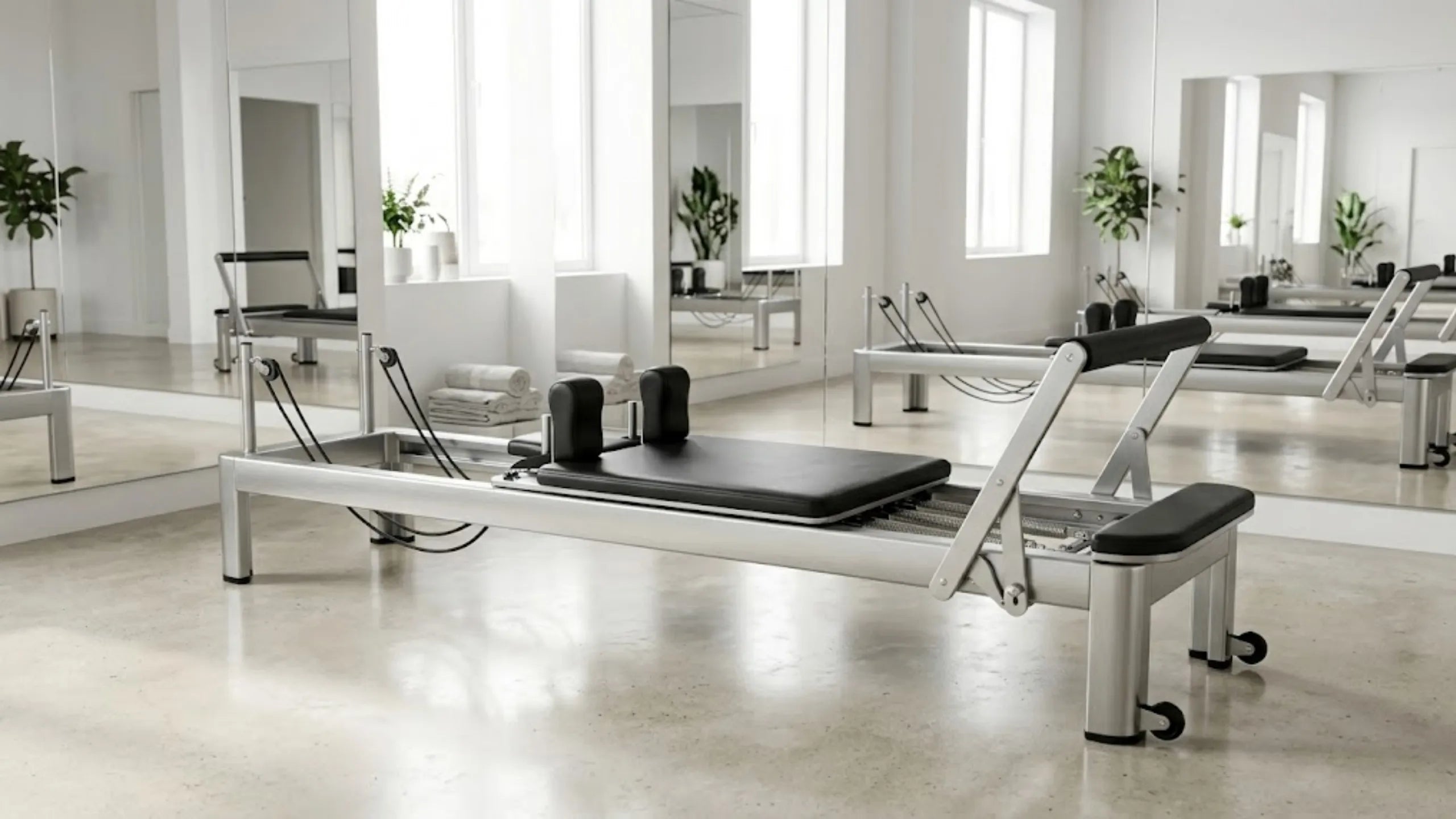
Best Aluminum Reformer for Home or Studio
The best aluminum Pilates reformer for your situation depends on whether you are equipping a home practice or a professional studio -- the requirements are meaningfully different, and the machines that excel in one context do not always translate perfectly to the other.
Home buyers typically prioritize portability, storage, and daily-use durability in residential conditions. Studio buyers need commercial-grade construction that handles multiple users, heavy daily turnover, and the wear patterns of a professional training environment.
This guide covers the best aluminum reformers for both contexts, explains what separates home-use and studio-grade machines, and helps you make the right choice whether you are buying one machine for your home or equipping a boutique studio.
SHORTCODE: [PRODUCT SHORTCODE -- Insert product grid here]
Best Aluminum Reformers by Use Case -- Our Top Picks
Best aluminum reformer for home use: Align Pilates C8 Pro
For home use, the Align Pilates C8 Pro delivers the best combination of professional performance and practical home suitability. It is light enough for one person to move, has a compact aluminum frame that fits in most home gym configurations, and performs at the level of machines used in professional instruction programs.
The 8-position gearbar footbar is one of the most versatile footbar systems in the category -- it adjusts smoothly and locks positively without tools. The 4-spring resistance system covers the full range needed for classical and contemporary Pilates.
At its price point, the C8 Pro is the machine we recommend most consistently for home buyers who want professional performance without the weight and aesthetic of a wood reformer.
Best aluminum reformer for boutique studios: Core Collab Queen Studio
The Core Collab Queen Studio Reformer is built to commercial specifications for boutique studio use. The heavier-gauge aluminum frame, upgraded carriage system, and commercial-spec hardware throughout reflect the demands of a professional training environment.
It handles multiple users per day at different body weights and training intensities without the carriage drift, spring inconsistency, or frame flex that lighter machines develop under commercial use.
The Queen Studio is compatible with jump boards, box sets, and tower attachments -- allowing a full classical repertoire for all students. Its commercial-grade construction also means it holds its value and performance standard over years of intensive use.
Best dual-use aluminum reformer: Pent Luxury Reformer
The Pent Luxury Reformer performs equally well in home and boutique studio contexts. The aircraft-grade aluminum construction handles commercial-level use without degradation, while the refined aesthetic and quiet carriage movement make it entirely at home in a premium residential wellness room.
Pent is the choice for buyers who do not want to compromise -- who want the best training experience available regardless of whether the machine lives in a private home or a client-facing studio.
Its price reflects the manufacturing quality. But for buyers who measure value over the machine lifetime rather than at the moment of purchase, the Pent's cost-per-year is competitive with mid-range alternatives.
SHORTCODE: [PRODUCT SHORTCODE -- Insert product grid here]
Home vs. Studio: What Actually Differs in Requirements
Usage intensity: the key differentiator
The most important difference between home and studio reformer requirements is usage intensity. A home machine used daily by one or two practitioners at controlled intensity faces a fundamentally different load profile than a studio machine used by 8 to 15 different students per day at varying weights and abilities.
Home-use machines from quality brands like Align Pilates and Core Collab are engineered for consistent daily use by 1 to 2 people. Studio-grade machines are rated for multi-user commercial environments. For home use, the studio-grade spec is not necessary -- but it does provide a significant performance and durability margin.
If you plan to use your home reformer for personal training clients in addition to your own practice, that changes the calculus. A home-use machine rated for 1 to 2 users daily should not be used with 6 to 8 clients per day -- that requires studio-grade construction.
Adjustability range for different body types and users
Studios need maximum adjustability because instructors work with clients of every height, weight, and ability level. Home machines used by one or two people of similar size can get away with a narrower adjustment range.
For home machines, verify that the footbar adjustability and shoulder rest positioning accommodate your specific height and proportions. For studio machines, prioritize the widest possible adjustment range to accommodate the full spectrum of client body types.
The Pent and Core Collab Queen Studio both offer maximum adjustability ranges -- making them suitable for home users who want flexibility, or studios that need to accommodate diverse clients.
Maintenance expectations: home vs. commercial use
Home machines in single-user environments typically require minimal maintenance: wipe down after sessions, inspect springs monthly, lubricate the carriage track per manufacturer spec every 3 to 6 months. Total maintenance time per week: under 5 minutes.
Studio machines need more frequent maintenance due to higher use: daily wipe-downs, weekly spring and hardware checks, monthly carriage lubrication, and quarterly comprehensive inspections. Commercial use also accelerates spring wear -- budget for spring replacement every 2 to 3 years in a busy studio.
SHORTCODE: [PRODUCT SHORTCODE -- Insert product grid here]
Aluminum Reformer Specifications That Matter
Frame dimensions and studio footprint planning
Standard aluminum reformers are approximately 96 to 104 inches long and 24 to 28 inches wide. For home installations, this fits in most dedicated exercise rooms with standard ceiling heights.
For studio installations, plan adequate spacing between machines: a minimum of 24 inches between machine rails allows side-lying exercises and instructor access. For jump board work, additional clearance at the footbar end (at least 36 inches) is necessary.
Most boutique studio configurations with 4 to 6 reformers require a minimum room size of 20 by 30 feet to meet safety and comfort standards. Contact us if you are planning a studio buildout -- we can help with machine placement and quantity recommendations.
Weight capacity and structural ratings
All aluminum reformers we carry are rated for minimum 300 lbs user weight. Studio-grade machines like the Queen Studio Reformer are rated for 350 to 400 lbs to accommodate the full range of client body types in a professional environment.
Weight capacity is relevant beyond pure safety: machines rated for higher weights are typically more structurally robust across the board -- better springs, heavier carriage, stronger frame joints.
Warranty comparison: home vs. studio grade
Home-grade machines from our catalog typically carry 2 to 3 year structural warranties with 1 year on springs and upholstery. Studio-grade machines (Queen Studio Reformer, Pent) carry 3 to 5 year structural warranties reflecting their more durable construction.
As an authorized dealer, we handle all warranty claims directly with manufacturers. For studio buyers purchasing multiple machines, contact us about extended service agreements available for commercial installations.
Home or Studio Aluminum Reformer FAQs
Can I use a home-grade aluminum reformer for personal training clients?
A home-grade machine used with 1 to 2 personal training clients per day in addition to your own practice is generally acceptable. Beyond 3 to 4 total sessions per day, you are in studio-grade territory. The Core Collab Queen Studio or Pent are the right choices for light commercial use.
What is the best aluminum reformer under $3,000?
The Align Pilates C8 Pro is our top recommendation under $3,000 for both home and light studio use. It delivers professional-grade performance at a price that makes it one of the best-value aluminum reformers in the market.
How many aluminum reformers do I need for a boutique studio?
Most boutique studios start with 4 to 6 reformers for group class formats of 4 to 8 students. Private session studios typically run 2 to 4 machines. Contact us for a studio consultation -- we can help you plan the right quantity and configuration for your space and class format.