How to Clean and Maintain Your Pilates Reformer
Let’s be completely honest. The first time you bring a Pilates Reformer into your home, it feels like a massive upgrade to your lifestyle.
You finally have that beautiful, studio-quality setup right in your living room. But here is the hard truth that the fitness industry rarely talks about: that buttery-smooth carriage glide and whisper-quiet resistance do not last forever if you ignore basic maintenance.
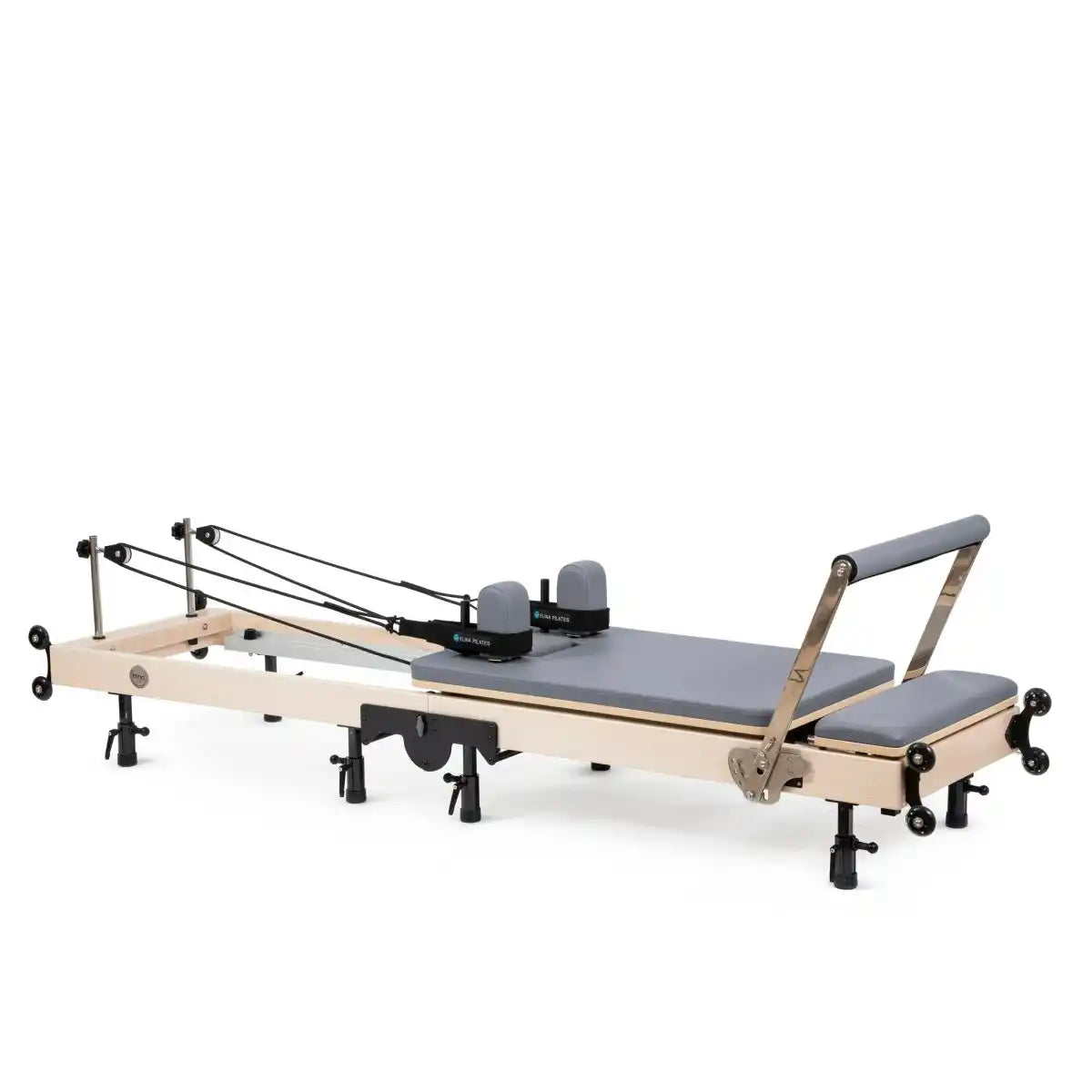
A Pilates Reformer is a highly sophisticated piece of mechanical equipment. It relies on rails, wheels, springs, pulleys, and structural integrity to keep you safe and provide results.
When a budget reformer shakes, squeaks, or feels light under a bigger body, it does not just feel annoying. It changes how confidently you can work.
If you want your machine to last a lifetime and keep delivering that flawless studio feel, you need to treat it with respect.
This comprehensive guide will walk you through the exact daily, weekly, and monthly steps you need to take to maintain your Reformer, fix common noises, and protect your investment.
Is it important to maintain my Pilates reformer?
Before we get into the "how," we need to understand the "why." A Reformer is essentially a moving platform suspended on tracks, held together by tension. If you neglect it, several things start to happen.
First, dust, hair, and sweat accumulate on the rails. This turns the smooth glide of the carriage into a bumpy, grinding nightmare. Second, springs that are never inspected can lose their tension or, worse, snap under pressure.
A cheap, lightweight machine that hops or squeaks when you move is a real physical danger.
You need a heavy frame that absorbs the inertia of the exercise. It must stay anchored to the floor like cement. And pay close attention to the progressive spring resistance.
Keeping your hardware locked down and your springs clean ensures that the machine remains stable, safe, and effective.
Daily maintenance of a pilates machine after a workout
The absolute most important thing you can do for your Reformer takes less than 60 seconds after every workout. You must wipe it down. Sweat is highly corrosive; if left to dry on vinyl upholstery, it will eventually cause the material to harden, crack, and peel.
How to Clean the Vinyl Upholstery
Never use harsh chemicals like bleach, Clorox wipes, or heavy alcohol-based sanitizers on your Reformer’s carriage, headrest, or shoulder blocks. These chemicals strip the protective oils from the vinyl.
Instead, use a gentle, pH-balanced solution. You can buy specialized gym wipes, or simply mix a few drops of mild dish soap with water in a spray bottle.
-
1Prepare the cloth: Lightly spray a microfiber cloth (do not spray the machine directly to avoid soaking the internal foam).
-
2Wipe main surfaces: Gently wipe down the carriage, the shoulder rests, and the headrest.
-
3Clean the footbar: Wipe down the footbar, as your hands and feet leave behind natural oils and sweat.
A tip for you: Wearing grip socks is not just about traction; they also make more sense from a hygiene point of view in a shared studio, and the same rule applies at home to keep foot sweat off your footbar.
Weekly maintenance of a pilates reformer
If your machine has around 113 cm of carriage travel, that can make a real difference for taller users. But that long travel distance also means more surface area for dust and debris to collect. Your carriage rolls on precision wheels (usually polyurethane) that glide over metal rails.
The Aluminum Rails
The rails act like magnets for dust, pet hair, and microscopic dirt from your shoes or socks. If you don't clean them, the wheels will run over this dirt, compressing it into a hard, sticky residue. Soon, your carriage will feel like it has "speed bumps."

Once a week, take a dry microfiber cloth and vigorously wipe down the entire length of the internal metal rails. If there are stubborn black spots of compacted dirt, use a damp cloth or a gentle multi-purpose cleaner to scrub them away, then immediately dry the area.
The Wheels
As you wipe the rails, gently push the carriage back and forth to expose different parts of the wheels. Wipe the wheels down carefully. If you notice long hair tangled around the wheel axles, use tweezers to carefully remove it. Hair buildup can cause the wheels to stall and drag rather than roll.
How to Perform Monthly Maintenance on a Pilates Reformer: Replacing Hardware and Springs
This is the part of maintenance that prevents injuries. Your machine relies on heavy-duty parts that endure massive amounts of tension.
Inspecting the Springs
Commercial steel springs give you mathematical, predictable tension. You need the constant, firm support that only a metal spring can give you under your feet. However, metal springs have a lifespan.
Looking for one that lasts?
If you’re still comparing machines, start with reformers built for better durability, support, and long-term use.
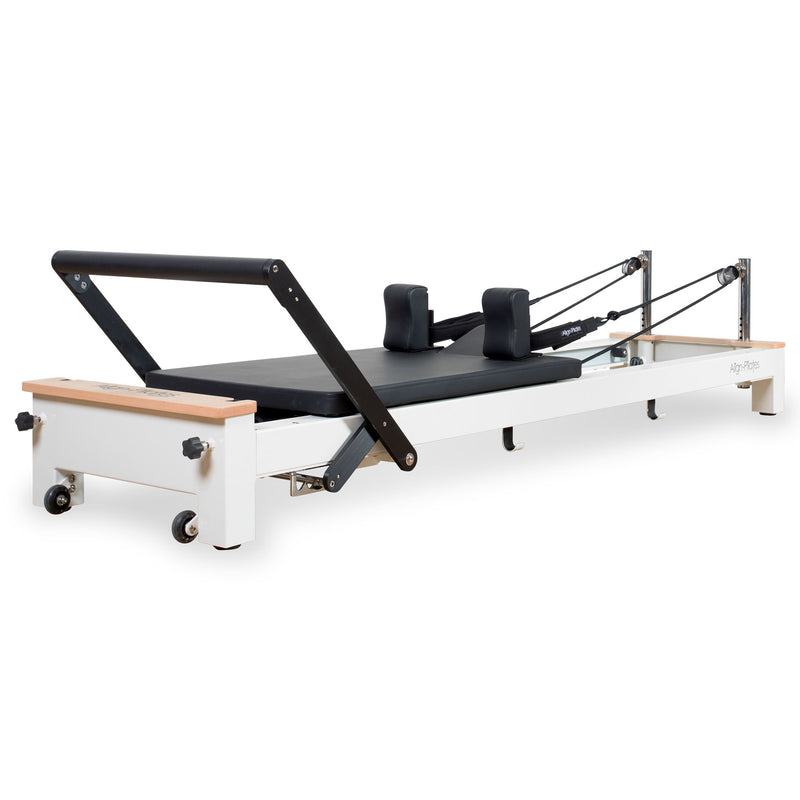
Every month, detach each spring and inspect it closely. Look for:
- Gapping: When the spring is at rest (not stretched), the coils should be tightly packed together. If you see daylight between the coils when the spring is relaxed, it is permanently stretched and must be replaced.
- Rust or Oxidation: If you live in a humid environment, lightly wipe the springs with a dry cloth to prevent rust.
- Hook Wear: Check the hooks at the ends of the springs to ensure they aren't wearing thin from rubbing against the gear bar.
Remember, you need a heavy, commercial frame that anchors to the floor and uses real steel springs, not elastics. Cheap bungee cords, on the other hand, deliver aggressive snap-backs when returning the carriage.
That uncontrollable yank hurts your joints, which are already softened by the relaxin hormone. If your machine uses bungee cords, inspect them weekly for fraying, as they degrade much faster than steel.
Checking the Ropes and Straps
Pull the ropes completely out and inspect them from end to end. Look for any fraying, thinning, or pilling. If the ropes look compromised, order replacements immediately.
For the hand/foot straps, most nylon or cotton loops are machine washable. Remove them from the ropes, put them in a mesh laundry bag, wash on a gentle, cold cycle, and let them air dry completely.

Never put them in the dryer, as the heat can melt the internal stitching and weaken the D-rings.
Tightening the Bolts
Lightweight machines under 100 lbs tend to slide, hop, or squeak. But even a heavy, commercial-grade Reformer can develop loose bolts due to the constant vibrations of the workout.
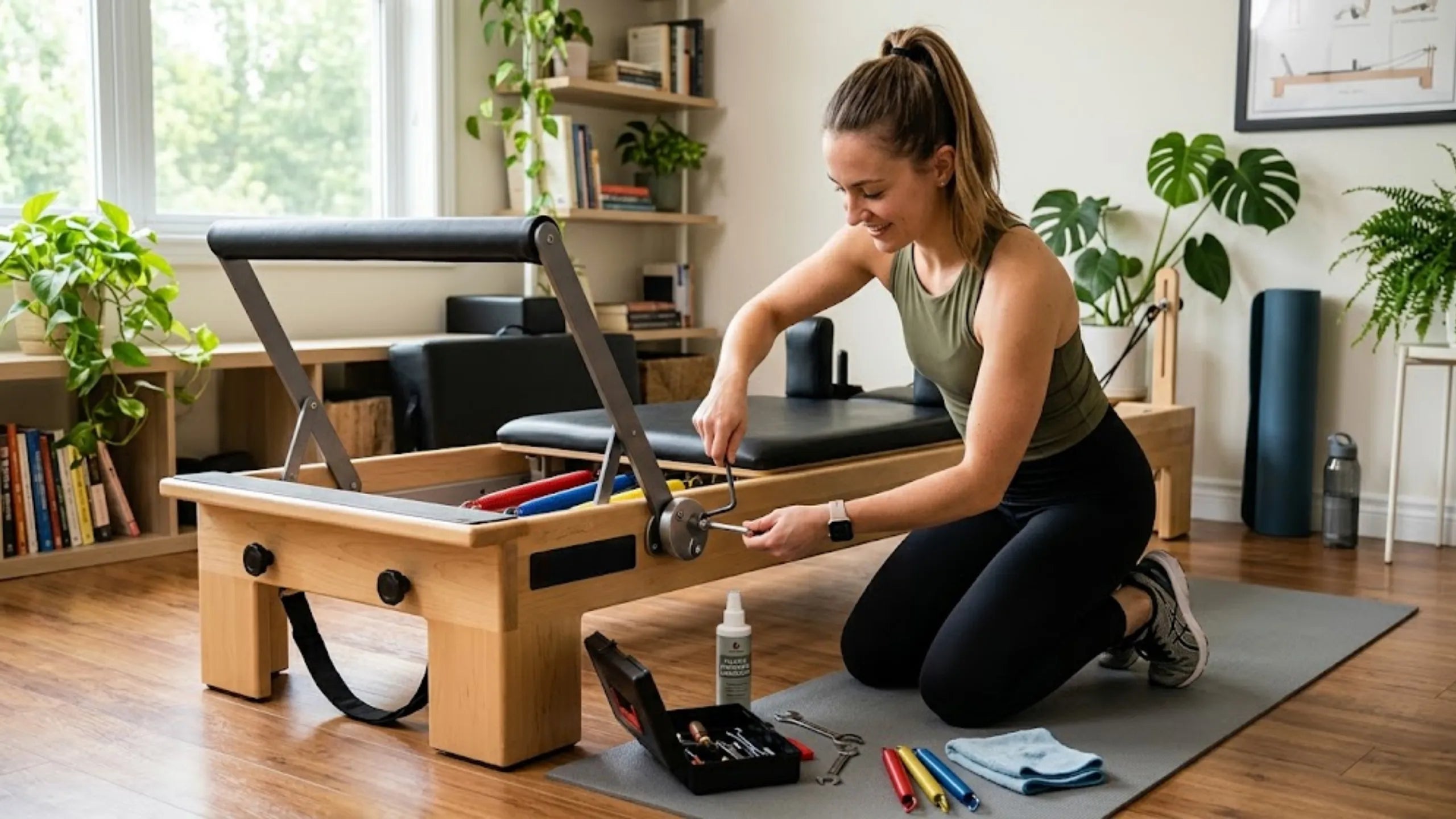
Grab your Allen wrench and check the bolts on the frame, the footbar mechanism, and the pulley risers. Ensure everything is locked down tight.
Fixing noises from my pilates reformer
Even with great maintenance, your machine might occasionally talk back to you. Here is how to diagnose and fix the most common issues:
The Squeaky Wheel: If you hear a high-pitched squeak as the carriage rolls, it is usually a dry wheel bearing.
Use a silicone-based lubricant (never WD-40, which attracts dirt and ruins polyurethane) and apply a tiny drop directly into the center bearing of the wheel. Spin the wheel to distribute it, then wipe away any excess.
The Grinding Rail: If the carriage feels rough or makes a grinding noise, there is dirt on the tracks. Do a deep clean of the aluminum rails and the wheel surfaces.
The Spring "Boing": Sometimes a spring will make a loud "boing" or popping sound when extended. This usually means the spring is rubbing against the frame or the gear bar. Ensure the spring is seated perfectly straight.
The Shifting Frame: If your machine creaks when you get on it, the floor underneath might be uneven. Check the leveling feet at the base of the Reformer and adjust them until the machine sits perfectly flat and flush against the ground.
How to maintain a pilates reformer over the long term: What to replace and how to do it
A well-maintained Pilates Reformer can last decades, but certain consumable parts will eventually need to be swapped out.
- Springs: For home use (training 3-4 times a week), springs should generally be replaced every 2 to 3 years to ensure the tension remains accurate and safe.
- Ropes: Replace these every 2 years, or immediately if you spot any fraying.
- Wheels: Unless damaged by heavy dirt buildup, a good set of polyurethane wheels can last 5 to 10 years in a home environment.
By treating your machine with care, keeping it clean, and respecting the mechanical parts, you guarantee that your home studio will always be ready to deliver the demanding, body-changing workout you expect.
Frequently Asked Questions (FAQs)
What is the best cleaner to use on a Pilates Reformer?
The safest cleaner is a simple mixture of mild dish soap and water. You can also use specialized, pH-neutral vinyl cleaners or gentle gym wipes. Avoid anything containing bleach, ammonia, or high concentrations of alcohol.
How often should I change the springs on my home Reformer?
For average home use, you should replace your steel springs every two to three years. If you notice any gaps in the coils while the spring is at rest, or if the tension feels uneven, replace them immediately regardless of age.
Why is my Reformer carriage not gliding smoothly?
This is almost always caused by a buildup of dust, hair, or dried sweat on the metal rails or the wheels. A thorough cleaning of the tracks and the wheel surfaces usually restores the smooth glide instantly.
Can I use WD-40 to lubricate my Reformer wheels?
No. Standard WD-40 is a degreaser and can attract dust, leading to a sticky buildup that will ruin the polyurethane wheels. If the bearings need lubrication, use a dry silicone spray or a specialized lubricant recommended by the manufacturer, and use it very sparingly.
How do I clean the hand and foot straps?
Most soft nylon or fabric loops can be removed from the metal clips and washed in a washing machine. Place them in a protective mesh laundry bag, wash on a cold, gentle cycle with mild detergent, and hang them to air dry. Never put them in a hot dryer.
How do I stop my Reformer from sliding on my hard floors?
If your machine is shifting during exercise, ensure you have placed it on a specialized, high-density rubber equipment mat. Additionally, check that the leveling feet under the frame are adjusted properly so the machine is perfectly balanced.
See which reformer suits you
Take a look at our reformers and compare by setup, support, and size before you end up with one that feels wrong from day one.

Explore the reformers
We are an authorized dealer shipping new equipment from Miami, with free US shipping and financing.