Does Pilates Build Muscle? What It Really Changes in Your Body
A lot of people walk into Pilates thinking it will feel gentle. Then 15 minutes later their legs are shaking, their core is on fire, and they realize this is not the soft stretch session they imagined.
That reaction is exactly why this question keeps coming up: does Pilates build muscle, or does it only “tone” the body?
The honest answer is yes, Pilates can build muscle. But the result usually looks more like better control, more firmness, stronger glutes and abs, and visible definition than the kind of dramatic size people associate with heavy barbell training.
In other words, it can absolutely change your body, but it changes it in a different way.
If you do Reformer Pilates with enough progression, the stimulus is stronger and easier to feel.
If you do mat Pilates, you can still gain strength and some muscle, but the result depends more on your level, your consistency, and how hard the sessions actually are. Pilates is not magic, but it is far from fluff.
Does Pilates help build muscle or just tone the body?
A lot of the confusion starts with the word “tone.” People use it to describe a body that looks firmer, more defined, and more athletic, but that usually means there is some real muscular adaptation happening underneath.
So when someone asks whether Pilates builds muscle or only tones the body, the practical answer is that it often does both at the same time.
What Pilates usually builds is not just random fatigue. It improves the way your body creates and controls tension.
Over time that can show up as firmer glutes, stronger abs, more shape through the legs, better posture, and a back and shoulders that look more organized.
Most people do not come out of Pilates saying, “I got huge.” They usually say, “I feel stronger,” “my waist looks tighter,” or “my body feels more put together.”
That difference matters because looking more muscular and adding a lot of raw size are not always the same thing.
You can build a stronger, denser, more athletic body with Pilates and still not chase the same visual result you would get from a heavy squat and deadlift program. That does not mean Pilates is falling short. It just means the adaptation is different.
Does Pilates build muscle if you already lift weights?
Yes, but the answer changes depending on who is asking. If you are starting from zero, Pilates can be a very real muscle-building stimulus because your body is learning tension, coordination, balance, endurance, and control all at once.

For a beginner, that combination can create visible change pretty fast when the practice is consistent.
If you already lift, the result is a little different. Pilates may not suddenly add a lot more size everywhere, especially if you are already doing hard strength work.
What it can do is improve your midline control, help you feel your glutes and hamstrings better, clean up your movement, and make your body feel stronger in positions that used to feel unstable or disconnected.
That is also why strong gym people can feel weirdly humbled on a Reformer. It is not because they are weak. It is because gym strength and Reformer control are not the same thing.
A lot of lifting happens on stable ground with predictable resistance. Reformer adds a moving carriage, long ranges, breath, timing, and very little room to hide behind momentum. You can be strong and still feel like a beginner the first time you try to move well on it.
Does Reformer Pilates build more muscle than mat Pilates?
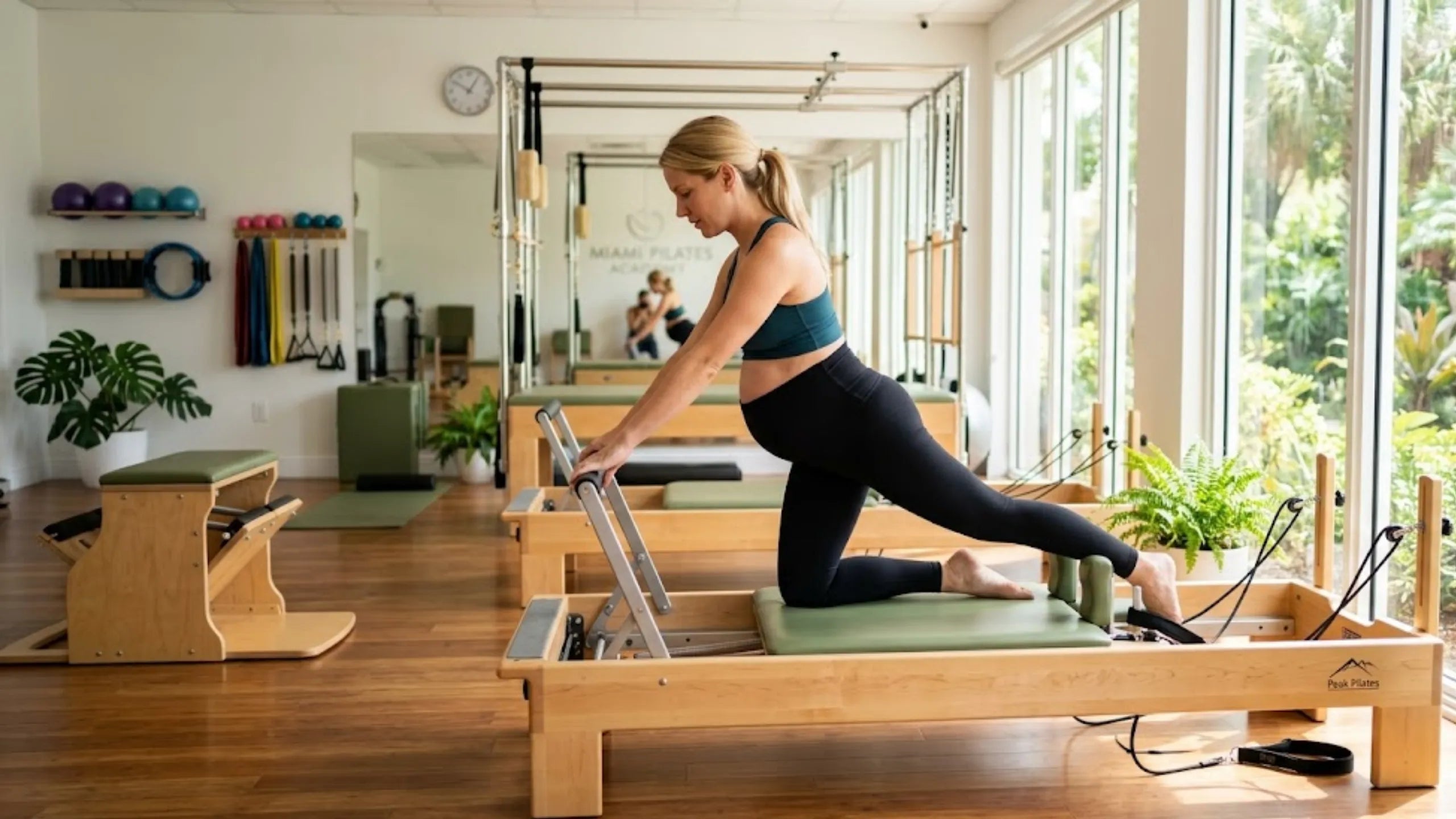
For most people, yes. Reformer Pilates usually makes the muscular challenge easier to feel because the springs give you clearer resistance and clearer feedback. You are not just moving through space.
You are pushing, resisting, returning, stabilizing, and trying to stay in position while the carriage exposes every little shortcut.
That is why so many people feel the change faster on Reformer. The machine makes it obvious when you rush, when you lose alignment, or when you stop controlling the return. That second half of the movement matters more than people think.
A lot of the work is not just in pressing the carriage out, but in bringing it back without letting the springs take over.
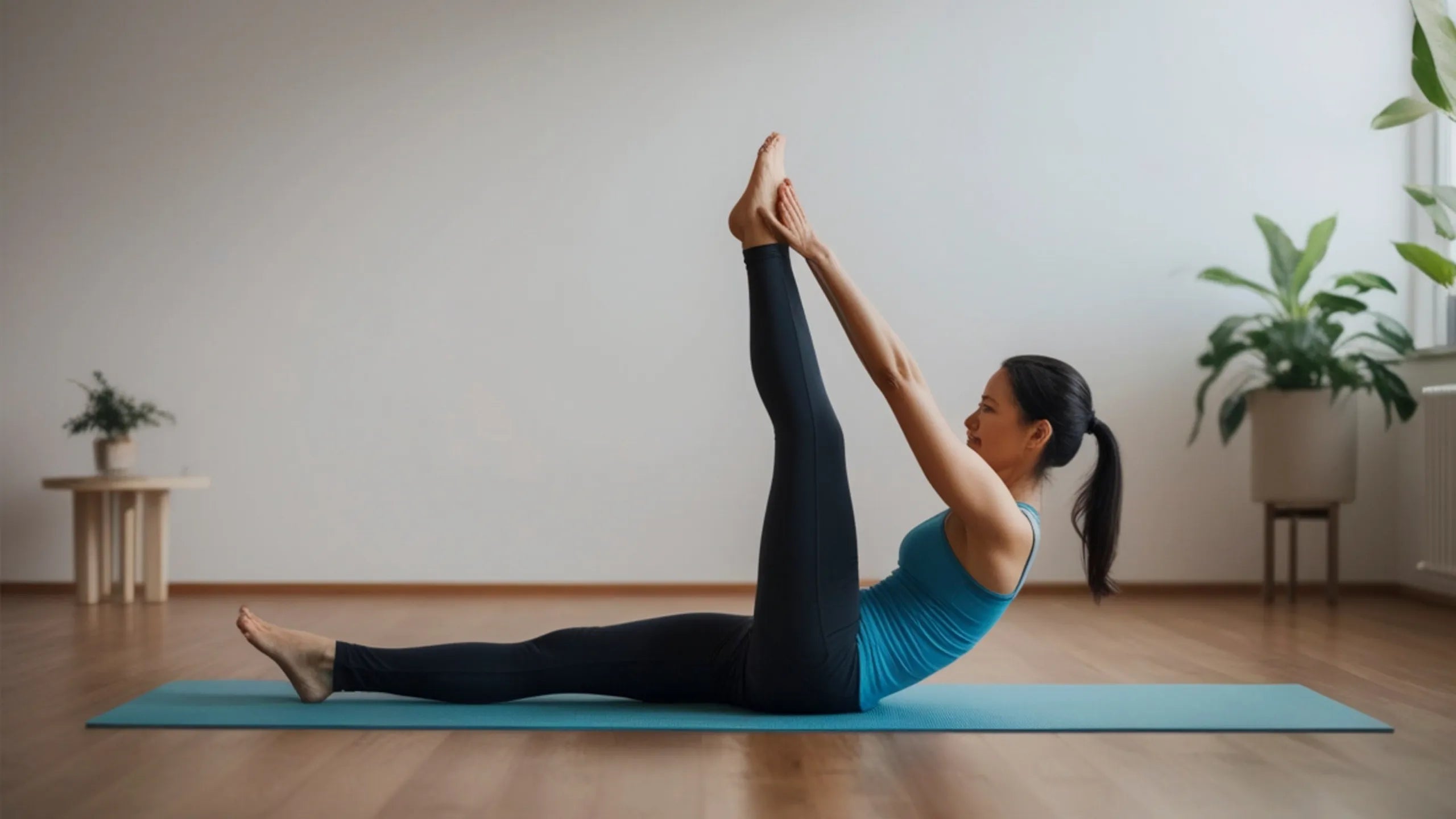
Mat Pilates can still build strength and some muscle, but it plays a different game. It asks more from your bodyweight control, leverage, tempo, and your ability to stay organized in difficult positions without the machine giving you constant feedback.
For some people that is brutally effective. For others, especially beginners, the resistance feels less obvious than it does on a Reformer.
So if the question is which one tends to feel more like muscle-building work, Reformer usually wins. If the question is whether mat Pilates still counts as serious training, the answer is also yes.
It just depends on how it is programmed and how much control and effort the person brings into it.
Can Pilates build leg muscle and real muscle mass?
Yes, Pilates can build leg muscle, especially in the glutes, thighs, and the smaller support muscles around the hips.
This is one of the first places people notice a difference. They talk about stronger legs, firmer glutes, better balance, and that feeling of having more support when they walk, squat, or go up stairs.

A big reason for that is that Pilates does not only ask the legs to push. It asks them to control. On the Reformer, footwork and lower-body sequences often create that deep shake because you are not just pressing the carriage away.
You are also managing the return, staying aligned, and keeping the whole system steady while your legs keep working.
That said, there is a nuance here that matters. If your goal is maximum lower-body size, like the kind of muscular look you chase with heavy squats, deadlifts, hip thrusts, and leg press, Pilates alone may not be enough.
Pilates can help you build some muscle mass, but it is usually better at building density, control, endurance, and visible shape than it is at creating big jumps in size.
This is why so many people get good body-composition results from Pilates without looking bulky.
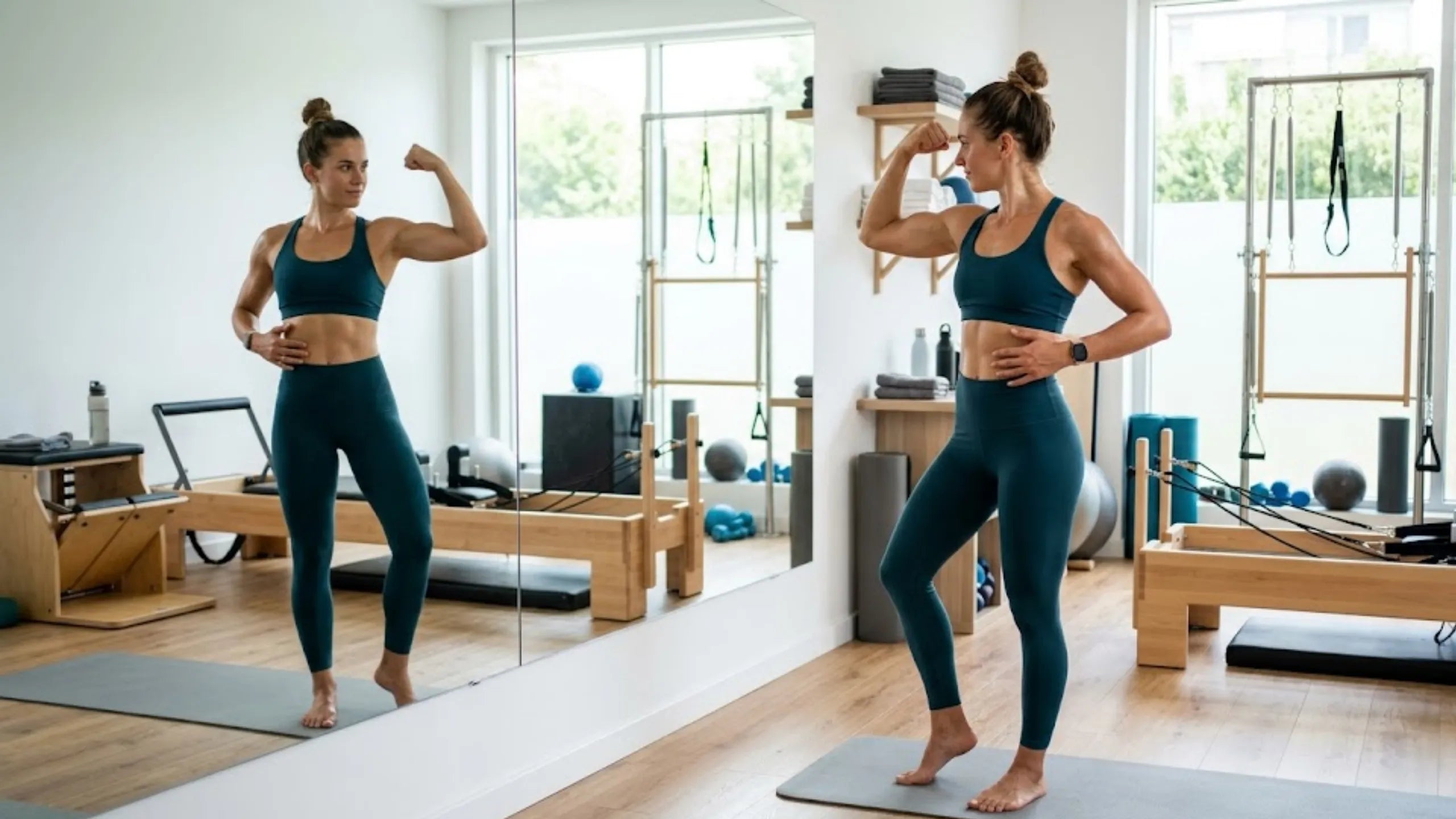
Their posture improves, their core works better, their glutes engage more, their legs feel firmer, and their body starts to look more athletic. The scale may barely move, but the mirror often tells a different story.
Why Pilates feels so hard even when you are fit
This catches a lot of people off guard. They expect Pilates to feel easier than gym training, then halfway through class they are sweating, shaking, and wondering why a slow movement is hitting so hard. The answer is simple: control is work.
A lot of exercise lets you cheat a little. You can rush reps, use momentum, or power through a weak position. Pilates does not really let you do that for long.
When the movement is done well, your body has to stay organized the whole time. Your ribs, pelvis, shoulders, legs, and breath all have to cooperate while the tension keeps building.
That is also why the famous Pilates shake is so common. Most of the time it does not mean something is wrong. It means your body is working hard to maintain control under tension.
That shake often shows up right at the point where the movement is still clean, but your muscles are recruiting harder so it does not fall apart.

This is also the reason people leave class red, sweaty, and kind of shocked by how intense it felt. Pilates may look clean and controlled from the outside, but inside the body it can feel relentless. It is not chaos. It is not aggressive.
It is just that slow, precise work can become brutally demanding when you remove momentum and ask the body to stay honest.
Does progression matter in Pilates?
Completely. This is the line that separates movement from training. Pilates can build muscle, but not just because you showed up and stretched near some springs. The body changes when the work becomes progressively more challenging in a way that it has to adapt to.
Sometimes that progression comes from harder exercises. Sometimes it comes from better range, slower tempo, less rest, more control, or smarter spring choices. And this is where people get confused, because on a Reformer more spring does not always mean more work.
In some exercises, heavier spring helps you. In others, lighter spring forces you to stabilize more, which can make the exercise feel much harder through the core, hips, and smaller support muscles.
This is also why not every Pilates class produces the same result. A class that stays easy, avoids progression, and never really challenges control will not build the same muscle as one that asks for precision, range, endurance, and real effort.
Pilates works best when it is treated like practice and training, not just activity.
Does the Reformer machine matter if you are tall or heavier?
Yes, more than people think. If you are tall, broader through the shoulders, or simply a bigger human, the machine can change the whole experience. When spring tension alone stops being enough, a tower adds bars and new angles of pull: that is what Pilates towers are for.
This part is not flashy, but it matters because a poorly sized reformer can make good movement harder than it needs to be.
Details like 113 cm of carriage travel are not random spec-sheet filler. A longer carriage gives taller users room to actually finish the movement without cutting range.
If the travel is too short, the exercise can start to feel cramped and unnatural, and that affects both comfort and training quality.

The same goes for user capacity. Numbers like 150 kg or 159 kg are not only about whether the machine technically holds you. They also change how stable, planted, and trustworthy the whole setup feels.
When a budget reformer shakes, squeaks, or feels light under a bigger body, it does not just feel annoying. It changes how confidently you can work.
So if someone is comparing machines for home use, especially for serious progression, longer carriage travel and higher user capacity matter a lot more than the marketing photos.
How long does it take to see results from Pilates?
Most people should not expect an overnight transformation, but they can absolutely expect early changes in how the body feels and moves. Usually the first things you notice are better posture, more awareness, stronger support through the core, cleaner movement, and that feeling of walking a little taller.
Visible muscle change usually takes longer. So does obvious body recomposition. Your body often gives you better control before it gives you a dramatic visual result. That is normal.
Pilates improves the quality of movement early, and that improved quality is often what sets up the visible changes later. A good way to know it is working is not only the mirror or the scale.
It is also whether positions that used to expose you now feel stronger, whether your legs shake less because your control is improving, whether your glutes and core wake up faster, and whether your body looks firmer even without a huge weight change. Those are very real results.
Is Pilates enough for muscle growth on its own?
For some people, yes. For others, not completely. If you are a beginner or someone coming back to training after a long break, Pilates can be enough to build noticeable strength, some muscle, and a much more athletic body.
The stimulus is real, especially when the classes are challenging and progressive.
If your goal is maximum hypertrophy, though, Pilates is usually better as part of the picture than as the whole picture. It gives you control, stability, coordination, and movement quality that transfer well into other kinds of training.
But if what you really want is a lot more total size in your quads, glutes, chest, or back, pairing Pilates with heavier strength work is usually the smarter move.
That is not a weakness of Pilates. That is just the honest expectation. Pilates is excellent at building the kind of strength that makes you feel more stable, more capable, and more connected to your body. And for a lot of people, that is not a side benefit. That is the main win.
FAQs
Does Pilates build muscle or only tone the body?
Pilates can do both. It can help build muscle, especially when the work is challenging and progressive, but most people notice firmness, better control, and more visible definition before they notice big size gains.
Does Reformer Pilates build more muscle than mat Pilates?
Usually, yes. Reformer makes resistance easier to feel and easier to progress. Mat Pilates can still build strength and some muscle, but for many people the stimulus feels clearer on the machine.
Can Pilates build leg muscle?
Yes. Pilates can strengthen and shape the glutes, thighs, and support muscles around the hips. The result is often firmer legs and better control rather than maximum gym-style size.
How long does it take to see results from Pilates?
Many people notice better posture, more body awareness, and more control within a few weeks. Visible muscle changes normally take longer and depend on consistency, difficulty, and training frequency.
Will Pilates make me bulky?
For most people, no. Pilates usually creates a leaner, firmer, and more athletic look rather than a bulky one.
Is Pilates enough if my goal is maximum muscle growth?
Usually not by itself. Pilates is excellent for control, stability, and functional strength, but if your main goal is a lot of muscle size, combining it with heavier strength training is normally the better move.
Why do my legs shake during Reformer Pilates?
Because your muscles are working hard to control the movement under tension. That shake is often a sign that the effort is landing where it should, not that something is going wrong.
Can beginners build muscle with Pilates?
Yes. Beginners often respond quickly because the body is learning tension, balance, control, and endurance all at once, which makes Pilates a very real training stimulus in the early stages.
Want to train with resistance at home? Explore our Pilates reformers.