What is asian pilates? Is it better or worse than conventional Pilates?
You probably saw a quick video online showing a nine-minute routine and now you are curious about this whole trend.
It is completely normal to ask yourself what is asian pilates workout and if it is something you should add to your weekly schedule.
The short answer is that it is not a brand new invention, but rather a highly focused approach to classical movements prioritizing perfect posture.
Asian Pilates what is: What people actually mean when they say it
Let's look at the two different versions of this trend that are currently floating around the internet. First, there is the marketing label. Many fitness apps use this term to package standard mat stretches you can easily do against a bedroom wall.
They give it a catchy name to make a basic home workout feel like an exclusive new fitness category that you need to buy into. Then, there is the reality of what actually happens inside proper studios in places like South Korea, Japan, or Taiwan.
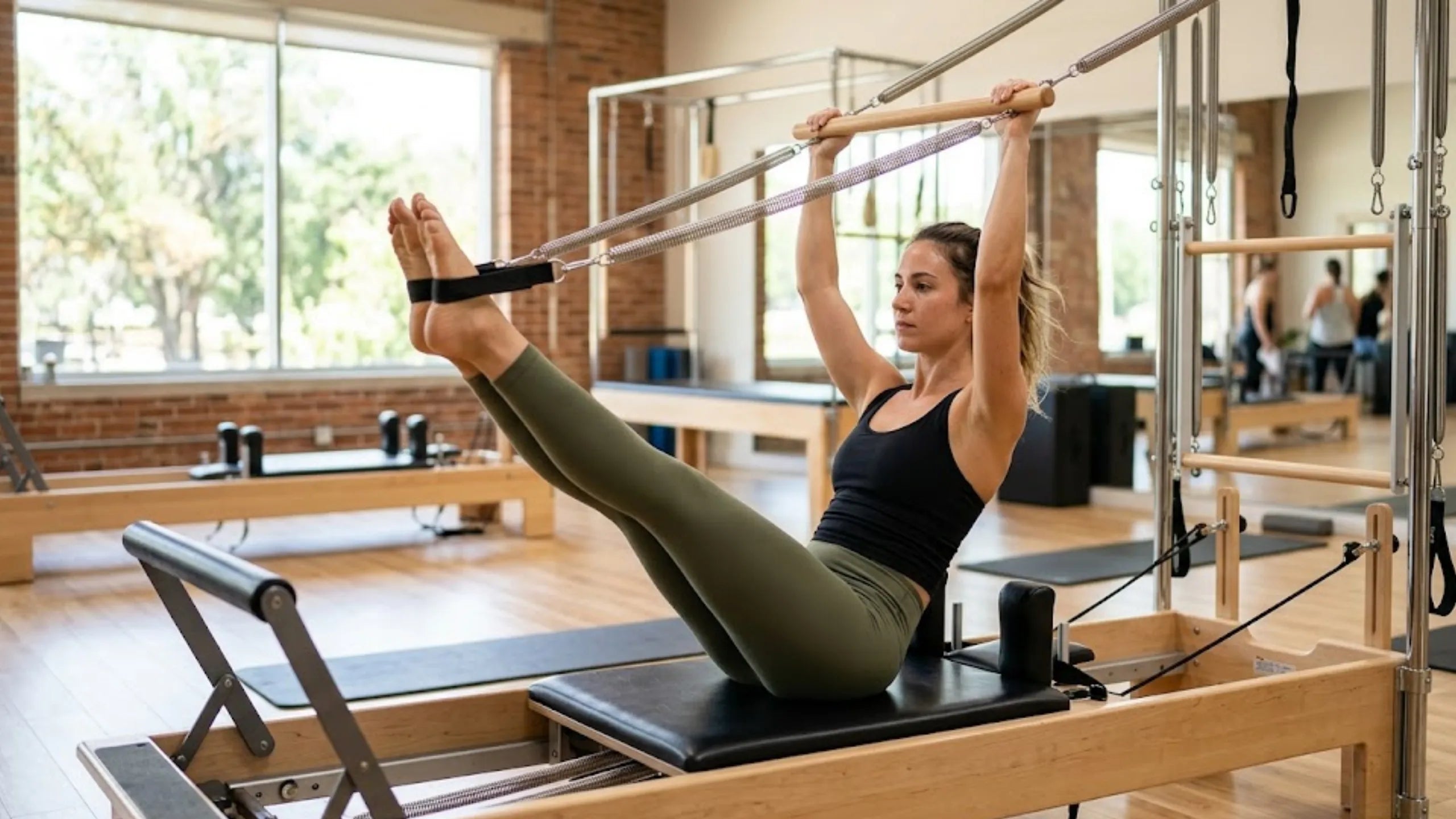
If you ask a local instructor over there asian pilates what is, they will point you straight to the Reformer machine. They teach a discipline that heavily values slow pacing, deep joint alignment, and incredibly smooth transitions between movements.
The goal in these rooms is never to race the clock or see how many fast repetitions you can squeeze into a fifty-minute hour.
It is all about lengthening your body lines and fixing those small postural habits you developed from sitting at a desk all day. Instructors spend a lot of time making sure your spine is neutral before you even begin to push the carriage.
It is a very mindful practice that requires you to be fully present, rather than just zoning out and letting momentum do the work.
What is the difference between Pilates and Asian Pilates: It all comes down to pacing
This brings us to the core of the question. The difference is not about secret exercises, but rather the intention behind your movement. When someone asks what is the difference between pilates and asian pilates, I always talk about the mental focus required in the room.
In a lot of Western gym environments, a good workout is usually judged by how loud the music is and how much you sweat. In the Asian studio approach, the environment is much quieter and the main objective is complete body control.
You are not looking for immediate muscle burnout. You are looking to make every single repetition look and feel structurally perfect.
It is a highly precise practice. Instructors will often pause the entire class just to adjust the tilt of your pelvis by a fraction of an inch. That level of meticulous detail is exactly what builds the long, elongated posture people associate with the method.
Quality always wins over quantity here. Doing five flawless, incredibly slow reps is celebrated much more than rushing through twenty messy ones.

The instructors want to see that you can initiate the movement from your deep core, rather than just pushing heavily with your legs. This change in pacing fundamentally changes how the exercise feels, making a simple lunge feel like a completely new challenge.
What is Asian Pilates vs Pilates: A real look inside the studio
To give you a better idea of how this feels in person, a client of mine who recently moved back from Seoul shared her experience. If you are wondering what is asian pilates vs pilates in daily life, her transition perfectly sums up the contrast.
She used to take intense, fast-paced classes in the US that felt more like a cardio bootcamp performed on a Pilates machine. When she joined a local Korean studio, she noticed immediately that the vibe was completely different and much more grounded.
The classes spent a significant amount of time on deep stretching, balance work, and learning how to breathe properly into the ribcage.
At first, she missed the heavy muscle burn she was used to, feeling like the sessions were almost too gentle for her fitness level.
But after a few weeks of consistent attendance, she realized her persistent lower back pain had completely vanished. The slower pace forced her to use her deep stabilizing muscles instead of just relying on her dominant, outer muscles.
It gave her a pain-free posture that the heavy, aggressive workouts had never been able to provide. She finally understood that moving slower actually requires a much higher degree of strength and concentration.
What is the difference between Asian Pilates and regular Pilates: Why your legs start shaking
This leads to a really interesting situation when you finally lie down on the Reformer carriage for the first time. There is a very specific physical reaction to what is the difference between asian pilates and regular pilates that surprises most people.
I constantly see guys who can lift incredibly heavy weights at the gym struggle to get through their first ten minutes of class.
Their brute strength does not translate well here. Lifting a static barbell does not teach your body how to stabilize a moving surface.
The equipment requires a level of deep core stability that traditional weightlifting routines usually skip over entirely. Right in the middle of a slow, controlled lunge, you will likely experience the famous "Pilates shake."

That intense trembling in your legs is not a sign of weakness, so please don't let it intimidate you or make you feel out of shape. It simply means your brain is firing rapid signals to your smallest, deepest muscles to keep you from falling off the machine.
Those shaky legs are actually the best indicator that you are actively building functional strength. And the best reward comes at the end of the session, when you walk out of the studio feeling like your spine grew a full inch taller.
What is Asian Pilates exercises: The heavy spring dilemma
To get a real feel for what is asian pilates exercises, you need to change how you think about mechanical resistance.
A regular dumbbell feels exactly the same whether you push it up fast or bring it down slowly. But the springs on a Reformer are dynamic. They pull back against you, and you have to actively manage that returning energy.
Instructors often say the movements should feel dense and continuous, almost like you are pressing your legs through thick water. The actual challenge is rarely pushing the carriage away from the footbar. Momentum can easily do that for you if you aren't paying attention.
The hard part is using your abdominals to brake the return of the progressive spring so the carriage doesn't slam shut against the wooden base.
There is also a fascinating catch with this equipment: sometimes using less weight makes the exercise infinitely harder. When you take off a heavy spring, you remove the physical support that was anchoring you, leaving you to balance your own body weight.
See our home reformers
If you’re planning to start at home, compare machines by size, support, and setup before buying one that feels too light.
It forces your core to work overtime because you no longer have that heavy tension holding you steady.
If you want to train with equipment that handles this kind of nuanced tension smoothly, take a look at our heavy-duty Reformers.
What is Asian Pilates for beginners: Setting up your space the right way
Many people looking into what is asian pilates for beginners decide to start practicing at home with a purchased machine.
The common mistake is buying a lightweight, budget machine online just to test the waters and see if they like it.
In practice, those cheap frames usually squeak, slide across the floor, or break down after a month of consistent use.
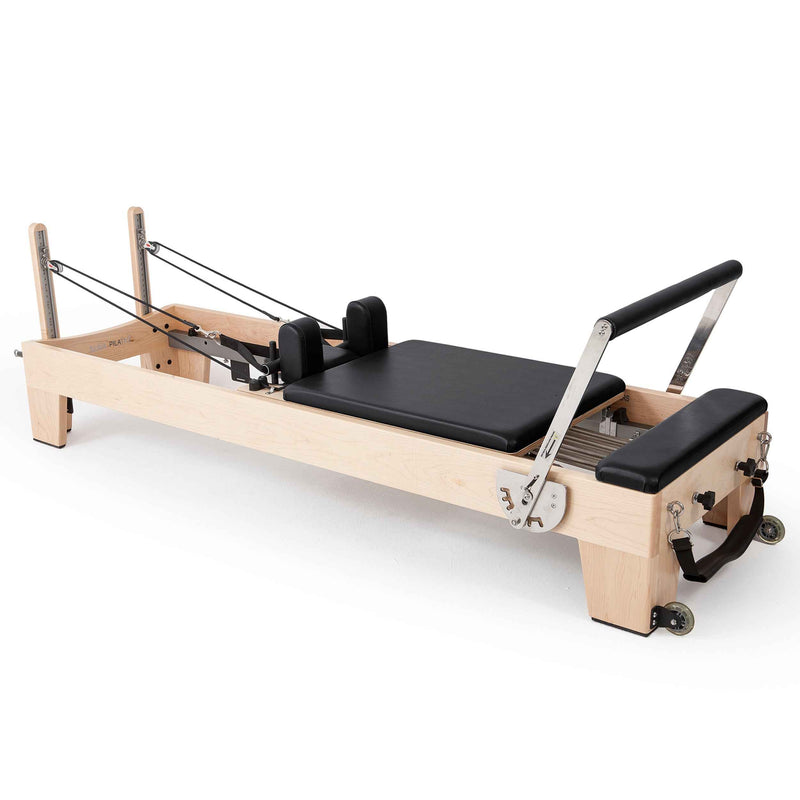
To train safely and get the feel of a real studio, you need a machine with substantial static weight.
You are looking for a high-end frame that weighs anywhere between 110 lbs and 185 lbs to keep you safely anchored to the floor. A solid build absorbs the kinetic energy of your movements, ensuring the equipment stays put while you work out.
The actual dimensions of the machine are equally important for securing real results in your body without compromising your joints.

If you are tall, a short carriage travel will ruin the experience by forcing you to bend your knees awkwardly during leg work.
You should look for a carriage travel close to 44.5 inches (113 cm) so you can extend your legs naturally and fully.
I also suggest checking that the machine has a weight capacity of at least 330 lbs (150 kg) for professional-grade stability. If you are over 5'11" and need room to stretch, our extended-travel Reformers are designed exactly for your height requirements.
Ultimately, the Reformer acts as a very honest mirror for your physical habits and imbalances. It will quickly show you where you rely on momentum and gently highlight where you lack the body control to stabilize yourself.
Practicing with high-quality springs will give you a pain-free posture that completely changes how you carry yourself every day. So forget about the catchy marketing names online and focus on the work itself.
Real progress happens when you get on a solid machine, slow down your pace, and pay close attention to how your body moves.
Frequently Asked Questions (FAQs)
Do I need previous experience to start this type of Pilates?
No experience is needed, just a bit of patience. Because the focus is entirely on posture and slow, controlled movements, it is actually an ideal starting point for beginners who want to learn proper alignment before adding heavy spring resistance.
How many times a week should I practice to see changes?
To notice a tangible improvement in your posture and functional strength, aim for 2 to 3 sessions a week. Consistency is what allows your muscles to memorize those new alignment patterns and hold them naturally throughout the day.
Is working out on a mat at home enough?
Mat workouts are great and challenge your body weight, but the deep muscle control we talk about is really awakened when you work against the live, pulling resistance of high-quality Reformer springs.
Why do I shake so much during the slowest exercises?
That shake is completely normal. It just means your smaller stabilizing muscles are finally waking up and working overtime to keep you balanced while the carriage moves underneath you.
Check out our most durable reformers
If you want smoother spring tension and a more stable feel, start with reformers built to handle that kind of control.

Explore the reformers
We are an authorized dealer shipping new equipment from Miami, with free US shipping and financing.